An Encounter with Suresh Singh
A Space Between An Encounter with Suresh Singh
Date May 2026
Location Spitalfields, London

Setting the Scene
I arrived early at the appointed meeting place: Christ Church, Spitalfields. Hawksmoor’s muscular expression of Anglican authority was intended as a reminder to the migrant Huguenot community of who was in charge in the early 1700s. The crypt was open and I soon found myself admiring the restored interior, including the magnificent walnut and brass organ dating from 1735. I was accosted by a verger and when I explained my presence and who I was to meet, he sighed saying,
“Yeah, Suresh is my brother-in-law,” he said. “He’s … a lot.”
It was, I reflected, an unusually candid briefing and an apposite example of Suresh’s connections to the area and community.
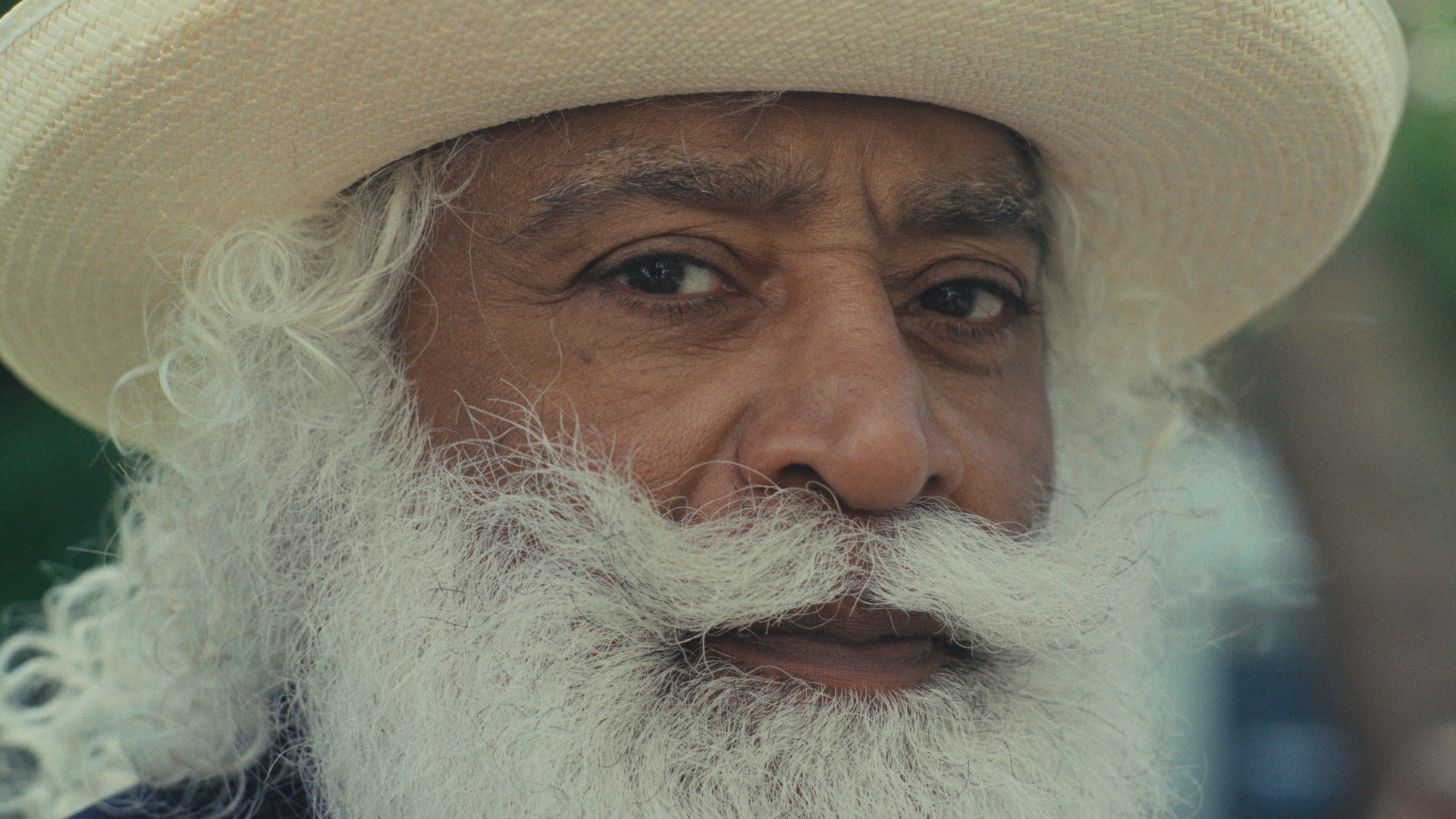
A few minutes later, Suresh Singh appeared on the steps. He was immaculately turned out: bespoke suit, handmade tie, luxuriant beard, carrying himself with the poise of a man who has decided that the world is essentially interesting. Dan Evans of Arcitile, who had asked me to interview him, had warned me that Suresh was a character. He had not oversold it.
We walked: Suresh spoke. About Hawksmoor and slavery, Udam Singh and Michael O’Dwyer, Siouxsie and the Banshees, about sash windows, Jimi Hendrix and Vishnu, karma and the Epstein files, IKEA and Le Corbusier, about growing up in Spitalfields with no hot water and the most beautiful street elevations in London. The conversation had the quality of a jazz improvisation. You could hear a structural logic underneath all the apparent chaos, and it rested, as jazz does, on a kind of radical generosity. Everything, for Suresh Singh, connects to love. His father’s love, mostly. A man who never raised his voice, refused to learn English on principle, shone shoes in the City of London and lifted his whole village out of poverty.
What follows is an edited and truncated version of our conversation (it’s a stretch to call it an interview). I have tried to preserve the flavour of how he speaks, which is to say: quickly, associatively, Cockney-accented, and with frequent recourse to the word “yeah” deployed as punctuation, as emphasis, and as an invitation to keep up.
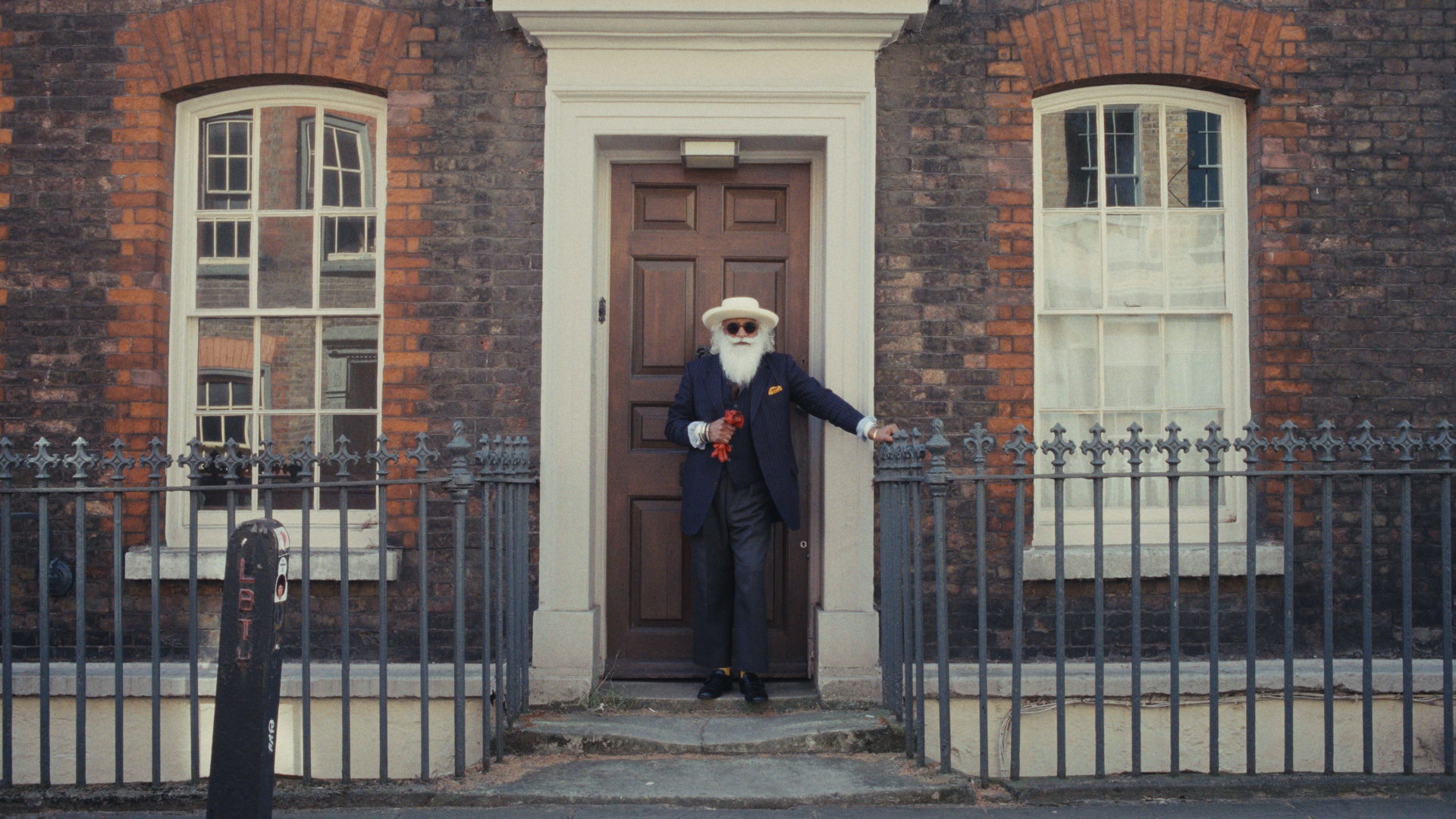
"Then I went to the Bartlett. And when I got there it was the punks of architects"
The ‘Interview’
Where does your sartorial philosophy come from? And what makes a good suit?
My tie is made by my wife. My mother said to her, “Darling, before he goes out, make sure it’s handmade.” No one else at that table is going to have the same tie, because they all went to bloody Marks & Spencer. That’s it, innit. You don’t want to be sitting around a table dressed identically. That’s not dressing. That’s a uniform.
I was voted into the Top Dressed list of Vogue India and all the top girls, the models, they call me Uncle-ji; they say that because they feel safe. The fashion industry is a nasty business. Full of abuse. But with me they feel safe, and they call me uncle, and I love that.
What makes a good suit? The story. This is my father’s suit. My father used to get stuff made bespoke; bring the cloth down, have it made properly. Or he’d pick it up off the Brick Lane market, a beautiful piece of cloth, carry it home. Some people would bury their men in their best suit, yeah, in the box and the Sikhs in my community would say that’s superstitious nonsense. In Sikhi, we don’t believe in that kind of thing. If the suit is there and it’s beautiful, what does it matter where it came from? The object is the object.
You said Sikhism is about being in the world, not of it. What does that mean, practically?
My father, and this is a man who could not read or write, he would say, “The word is not the thing.” He’d take me down to the Thames and say, “Look at the river.” And I’d say, “I’m looking at the Thames.” And he’d go, “No. The word Thames is a label. The word is not the thing. The tree is not the word tree. The river is not the word Thames.” You have to learn to see past the name, yeah.
And in all this chaos, Spitalfields in the ’60s and ’70s, everyone everywhere, gangsters, sawdust on the floor, everything going on, my father would just close his eyes and elevate himself out of the situation. Because he was seeking the nameless. The timeless. In Sikhi, the Divine has no name and no class and no gender. He always used to say, the West always measures. He believed in the immeasurable.
He said to me once: don’t be in this for yourself. Don’t get caught up in Maya, which is the material world. He was a father to 50 people, not just to me and my brother. The first one to stand up in the village, the first to come over. Baba Phalla, the landowner, told them, “That chamar boy there, the untouchable, the leather worker; we’re sending him first. He won’t get caught up in Maya. He won’t let you down. He will lift this village out of poverty.”
My father bought the whole bloody village in the end.
How did you come to architecture? You grew up in Spitalfields. Did the buildings around you matter?
My father came here because of the yogic pull. He said when he got off the boat, he was pulled up to Spitalfields. You’re in the square mile, the City of London, the imperial court, the corporation. He shone shoes just there. He couldn’t read and write, so he navigated by buildings. The Christ Church, the Bishopsgate Institute, the Guildhall: these were his landmarks. And he said to me, “If you see something and want to call it beautiful, first find out how it was made. Because if it was made by abuse, by slavery, how can you call it beautiful?”
He loved the street, yeah. People would say to him, get out of Spitalfields, it’s a dump, you’re pissing in a bucket, you’ve got no hot water. And he’d say, I love it here. Because if you move to Southall, he said, it all looks the same, and if you can’t read and write, you get lost! Here, every elevation is different. Every fenestration, every detail. You learn to read by looking.
I was lucky enough to get a bursary. It was Eddie, Derek’s father, who got me into it. He’d been watching me and he said, you’ve got a really good eye for architecture. He sent me to study carpentry first. I did the high-class drawing-room restoration specialism, took it to advanced level. Do you know the sash window? It’s the most English object in this country. Goes up and down, got a wagtail, got a pulley: completely mad installation, terrible insulation, but it’s beautiful. I can make them with my eyes closed.
Then I went to the Bartlett. And when I got there it was the punks of architects: Archigram, Peter Cook, David Greene. My tutor gave me a packet of seeds for my first project. I said, “What’s this?” He said, “Architecture is dead. Go and grow something.” These people were sticking two fingers up at the po-faced men designing tower blocks in Hackney from their studios in Hampstead. My father said, What a horrible word, brutalism. And he was right, yeah. You know what that concrete dust does to your lungs? Mesothelioma. And these rich kids going, oh, we’ve been to Marseille, we’ve seen the Corbusier buildings. I said, hang on, I’m from Spitalfields, and my mother’s from Chandigarh, which was entirely built by Le Corbusier. Put that in your pipe and smoke it.
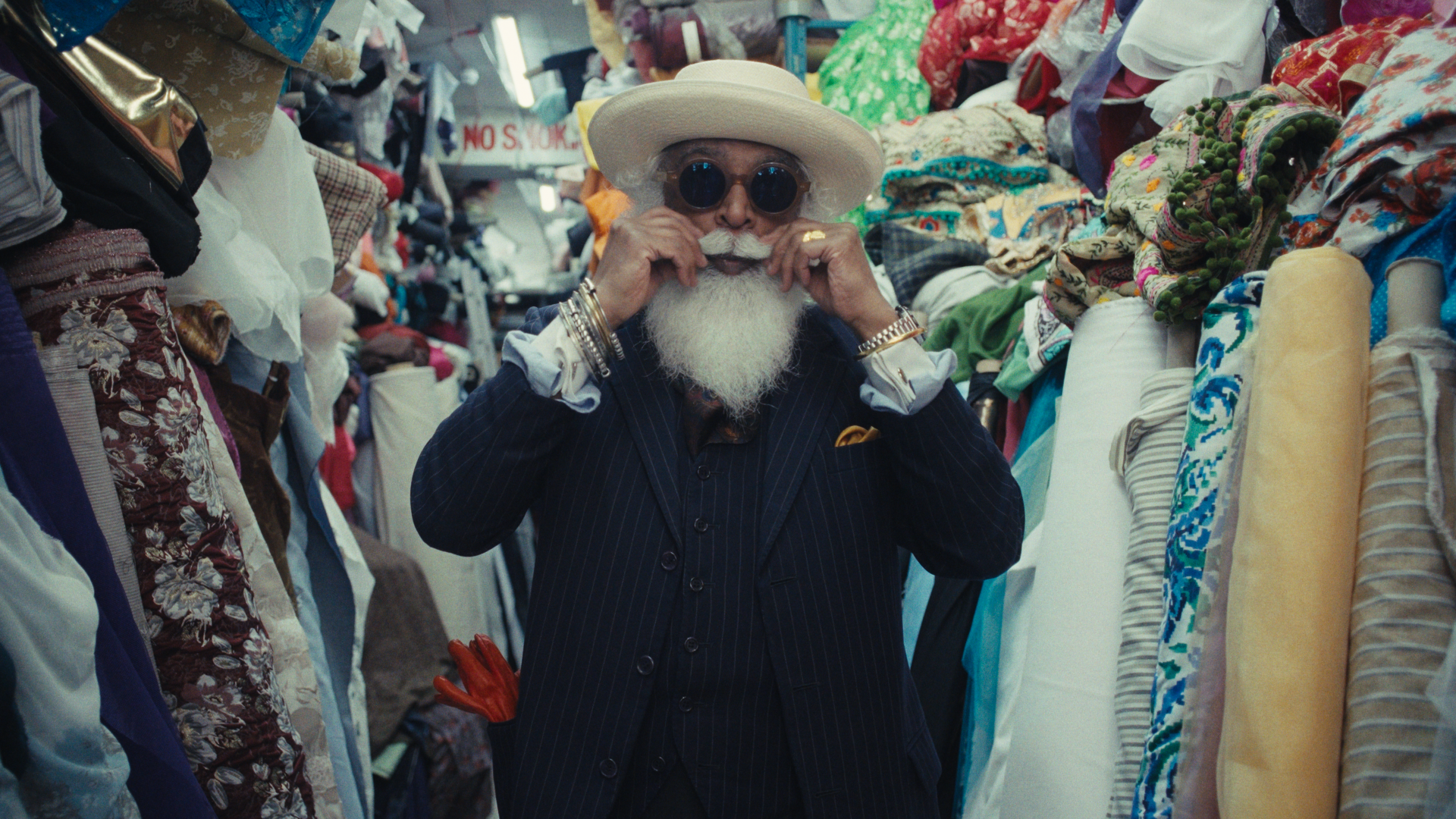
“Darling, before he goes out, make sure it's handmade.”
You said architecture is nothing to do with buildings. What is it to do with?
It’s the human interaction of people with place and space. That’s all. You’re looking for a space which is spaceless, timeless, nameless. And my father would quote from the Guru Granth Sahib, the Bhagat Ravidas, who was a shoemaker, like my father. He was describing Begampura, a utopia where there’s no class, no leadership, no taxes, no unkindness between people. My father was basically a hippie, yeah. He just dressed better.
The housing crisis, the knife crime, the cladding: all of it comes from architects who’ve never lived in these buildings, whose parents bought them their education, who copied Corbusier without understanding that you’re violating the earth when you build, you’re putting a concrete layer over what was once a field with butterflies and kingfishers and sparrows. And then you pop a bit of cladding on it to tidy it up. That building. Seventy-two people. To save a few hundred thousand pounds on a ten-million-pound contract. That’s the arithmetic they were doing.”
I work now with the Royal Institute of British Architects on education. We take kids in. We build things. We take them out of the estates in Barking because their mates have been killed there. And we teach them that making is thinking. That when you build something beautiful, that beauty comes from how you made it: from caring, from taking time. My father built our house, yeah. He furnished it from the Brick Lane flea market. You’d see him carrying a wardrobe down the street. Beautiful. Why wouldn’t you?
Tell me about punk. You’re still a punk.
Punk is a crude word, probably. The beautiful word underneath it is: no authority. Not in a bad way. My father said, when you regulate yourself, you don’t need no police. You don’t need no guru. No God, even, because you are God, when you’re regulated. He loved the Rastafarian community for the same reason. When he left the Punjab, there were nomads there with dreads down to here, and he related them to the dub movement, to the Jamaican carpenters on the building sites who knew how to face a speaker on the wall so the bass bounced back. That energy. Not mummy and daddy buying you a guitar. I got my drum kit from the back of a milliner’s for twenty-five quid.
I’d learned classical flute from the age of five because my mother said Lord Krishna plays the flute, so you play the flute. Then come 1977 and there was a music library at the Whitechapel Art Gallery (same architect as the Bishopsgate Institute, Townsend) and you could borrow vinyl. I said: can you get me Deep Purple? And he’d have it next day. The Crystals. The Clash. Yes. Mahavishnu Orchestra. The punks were going, “Oh, you can’t listen to Genesis.” My father said, don’t ever label yourself.
Then Spizz knocked on my door in Princeton Street. He said, we’re going on tour with Siouxsie and the Banshees and the Cure, ’78, ’79. Nine months. Nobody would sign Siouxsie at that time. They said she howled like a hyena. And the Cure could barely play. And we didn’t know what we were doing. But I went down to my dad and I said, “Dad, they want me on the tour.” And he just said, “You’ve got a drum kit. Go. But don’t lose your dharma,” which is your seeking within.
I went for nine months. Belgium. Joy Division. All of it. I was seventeen, eighteen. My dad let me go because he loved me. He could have said no. And if he’d said no, I’d have gone anyway, but I’d have gone resentfully. Instead I went with his blessing. And that’s the difference. That’s the thing I always say: if your parents love you, you don’t rebel against them. 99.9% of rebellion is really about something else.
Your brother-in-law Derek mentioned that you did restoration carpentry at Spitalfields Church. We’re standing right outside it now.
Derek’s father Eddie, he was director here for twenty-one years. He started giving me jobs when the houses were being restored. The rectory he lived in is the only Hawksmoor house in the country. So I got to work on garlic-twist balusters, on kite staircases, on sash windows, all of it. And I love that, yeah, because my father always said: you have to learn to use your hands. The making matters. Even Anthony Caro (I did my year out at his studio, the biggest sculptor in the world at the time) he taught me: look upside down. Look at things differently. Train your eyes.
A lot of the senior architects I know have all come back to craft now. They won’t build without talking to the carpenter first, thinking about the nature of the timber, the grain of the wood. About time. About the wellbeing of the people who build and the people who will live there. My father was on the building sites all his life, seven days a week sometimes, and it gave him a massive stroke at fifty. He survived. I used to massage him every morning with mustard oil, but the overwork nearly killed him. So you have to remember, your health is your wealth.
We’ve been walking for two hours. We’re back at the church steps. Suresh straightens his tie and shakes my hand with great warmth. He tells me to look up as I walk back. Always look up. Don’t miss things. Don’t be caught by the label. Look at the thing itself.
Walking home, I thought about Derek’s sigh. Suresh is definitely a lot but a lot of it is great. The whole experience reminded me of a passage from “On the Road” by Jack Kerouac.
“The only people for me are the mad ones, the ones who are mad to live, mad to talk, mad to be saved, desirous of everything at the same time, the ones who never yawn or say a commonplace thing, but burn, burn, burn like fabulous yellow roman candles exploding like spiders across the stars.”
Suresh Singh’s father, a chamar or shoemaker, came from Punjab in 1949 with a satchel containing clothes and a tin of shoe polish, he shone shoes in the heart of the empire and refused to learn its language. Yet somehow, his son became an architect who teaches kids in Barking and Dagenham why buildings matter, has graced the pages of Vogue, played drums with the Banshees and can tell you a story for each inch of Spitalfields.
“A Modest Living: Memoirs of a Cockney Sikh” by Suresh Singh is available at Spitalfields Life
"You're looking for a space which is spaceless, timeless, nameless"