Clerkenwell Design Week 2026
Date
May 2026
Location
Clerkenwell, London
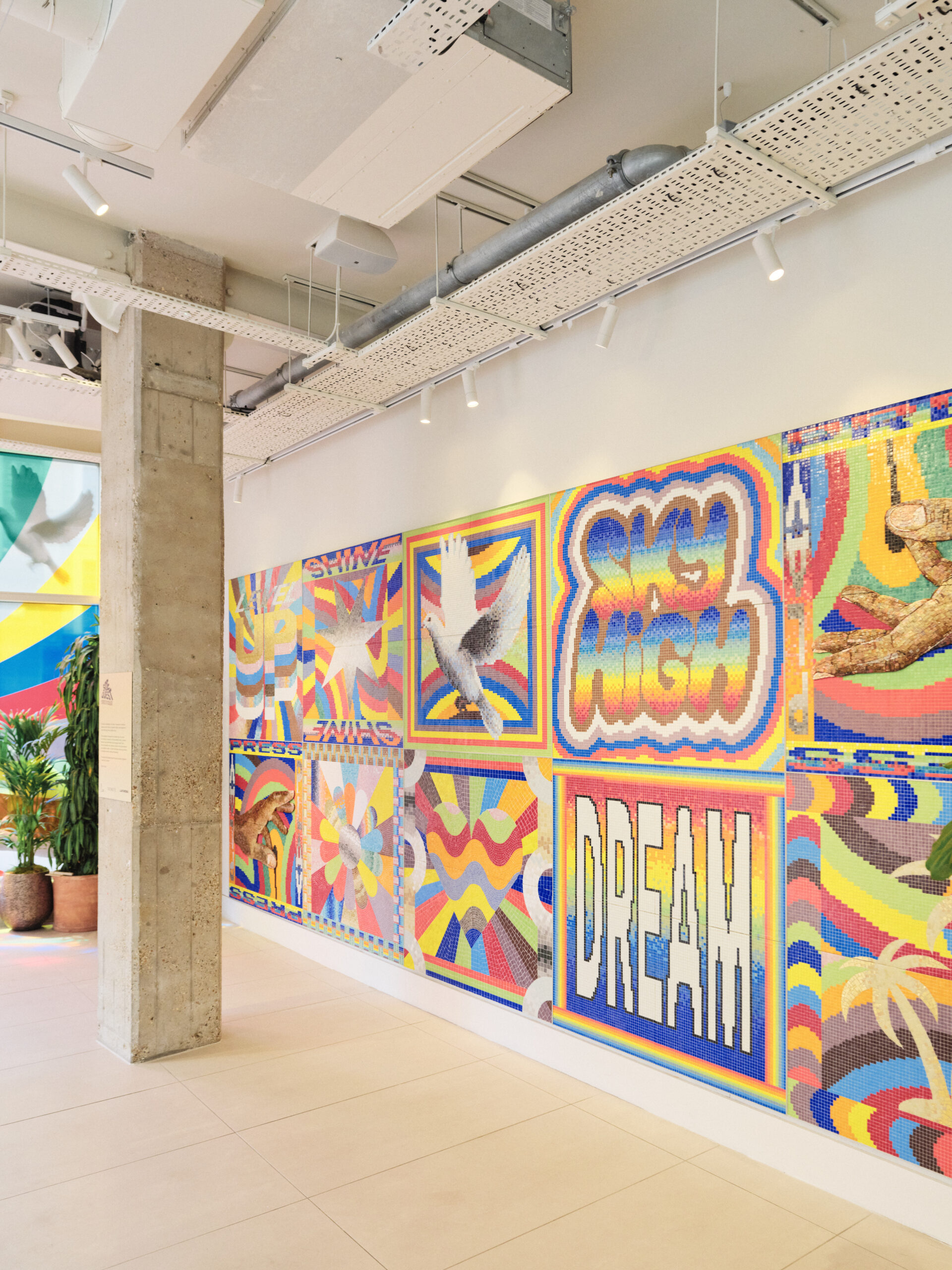
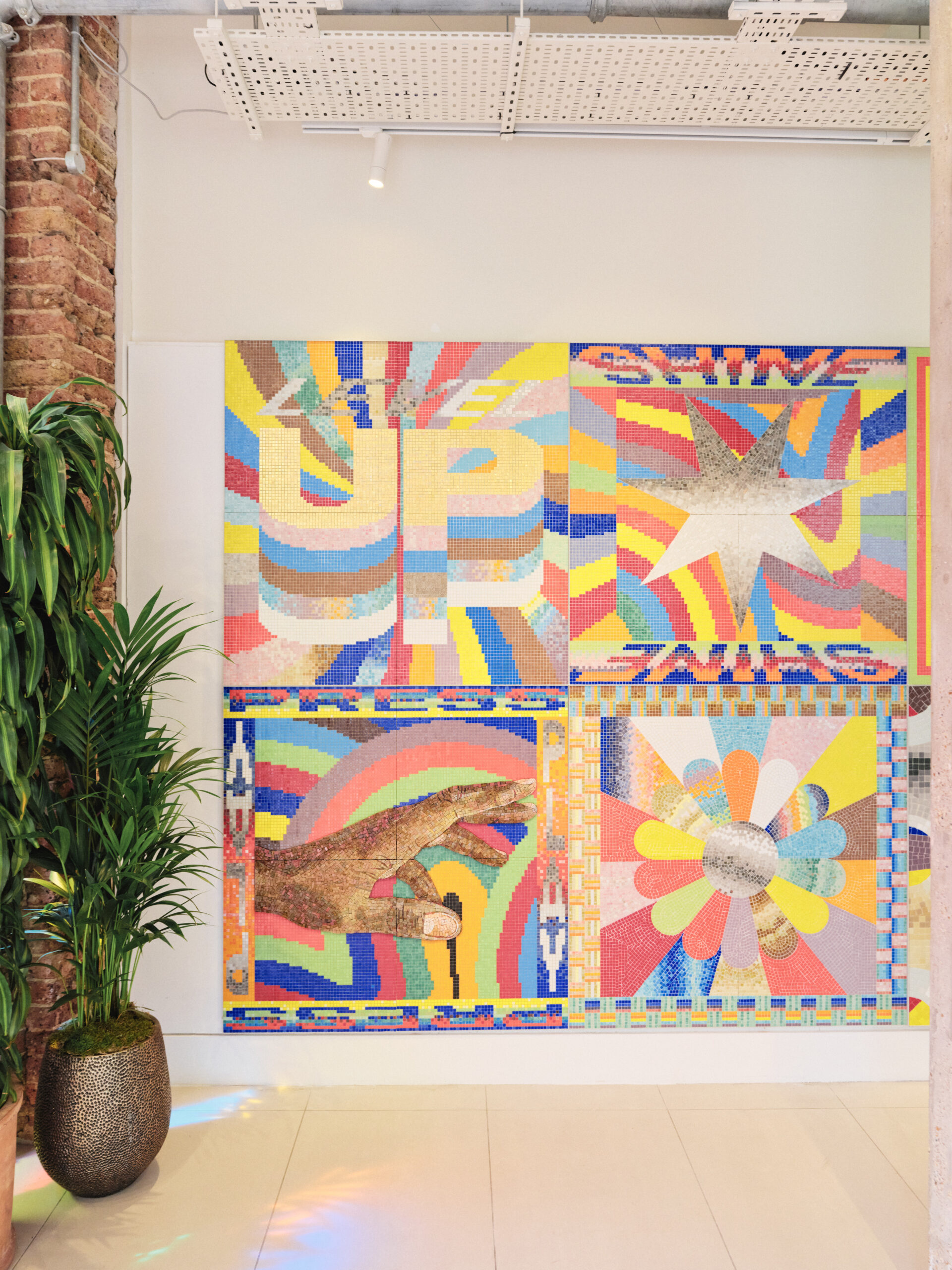
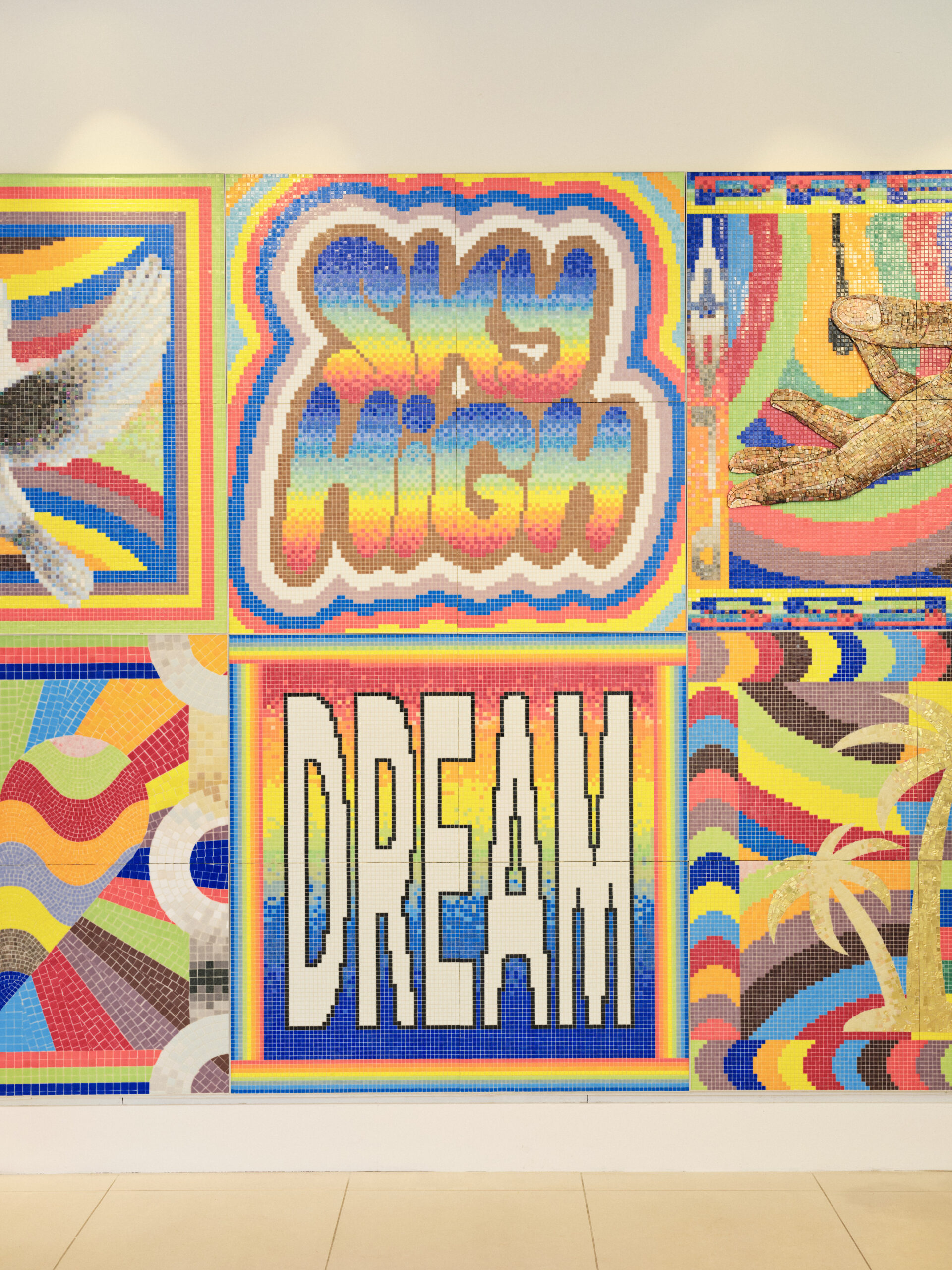
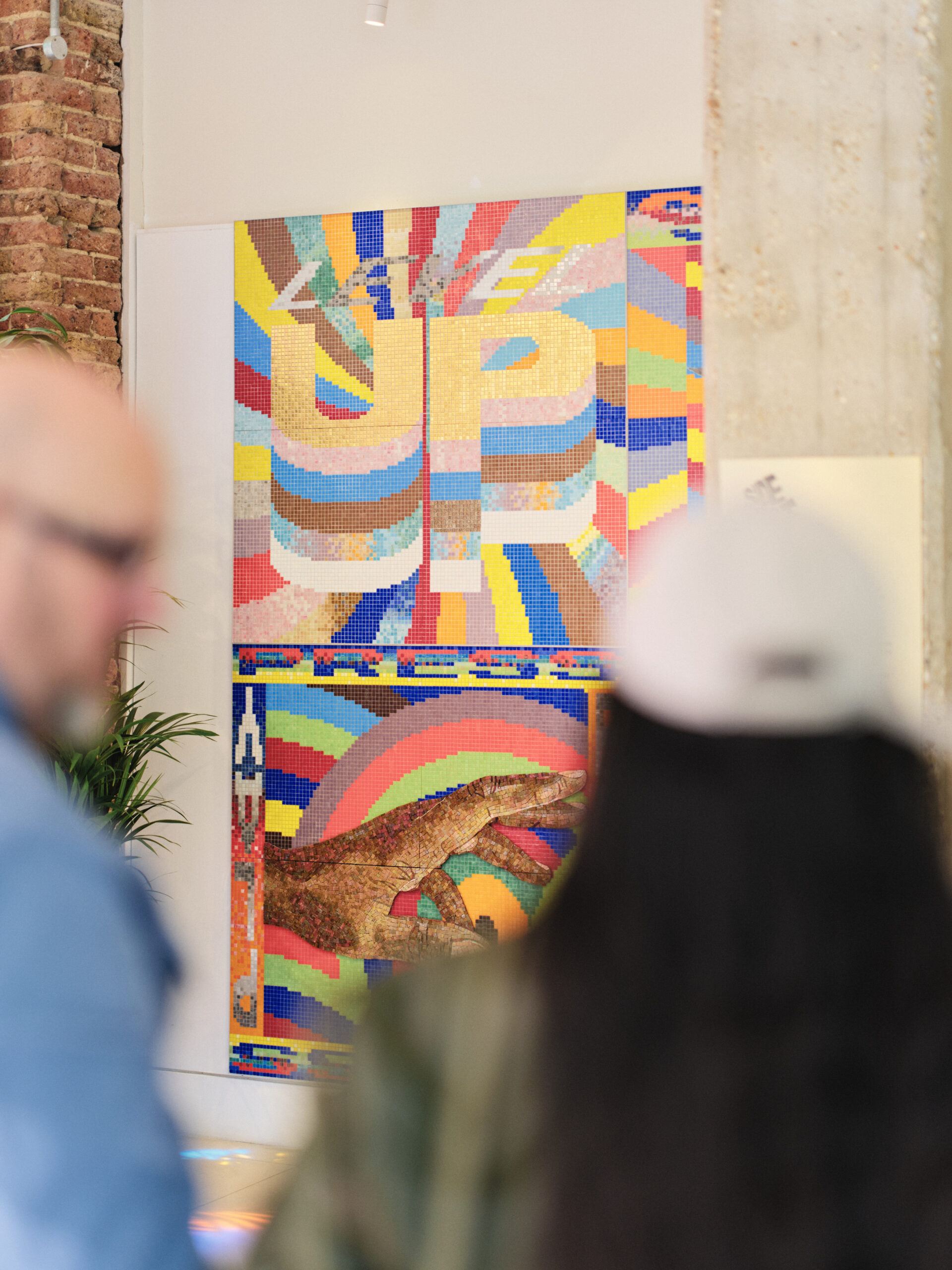
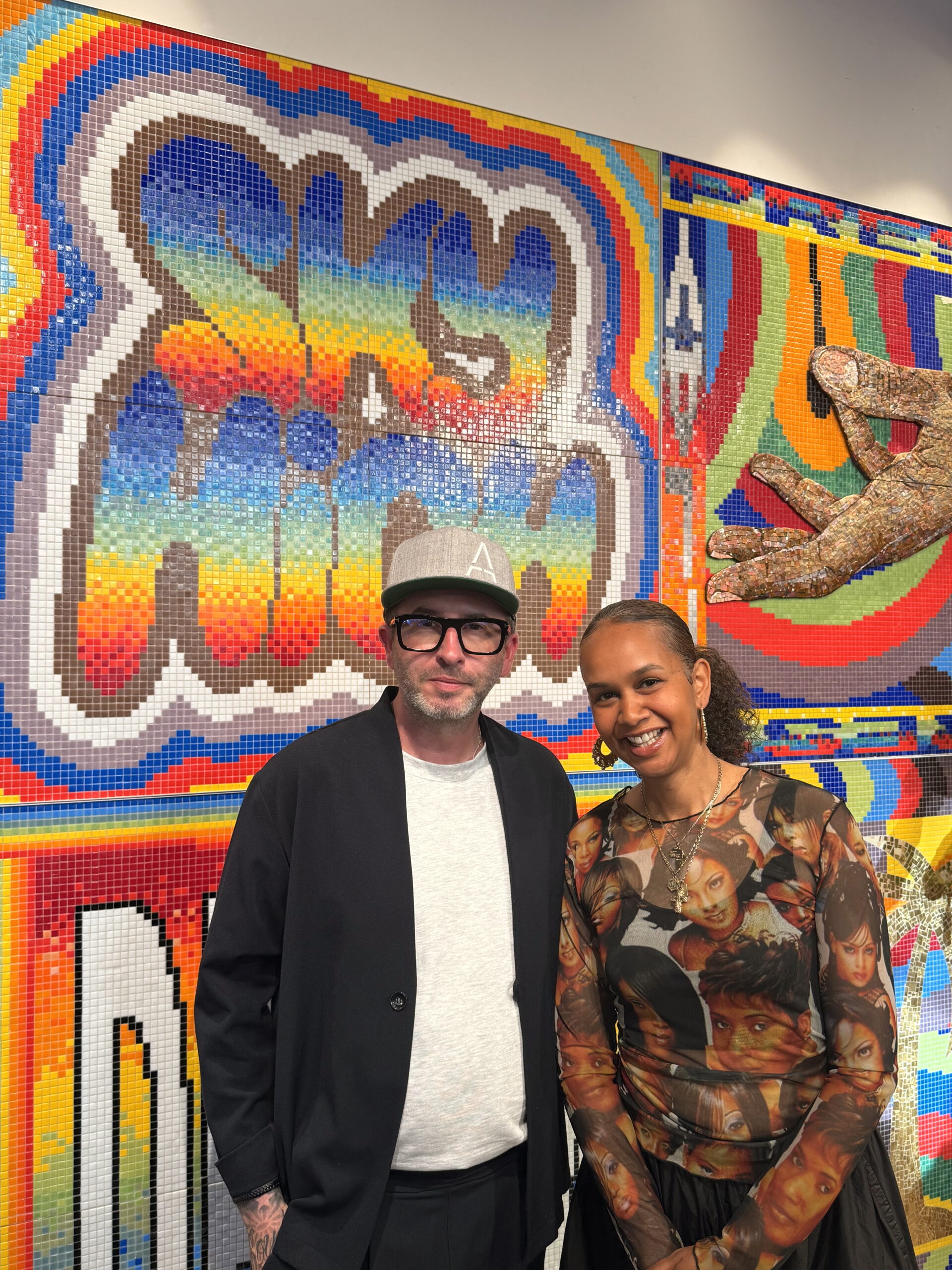
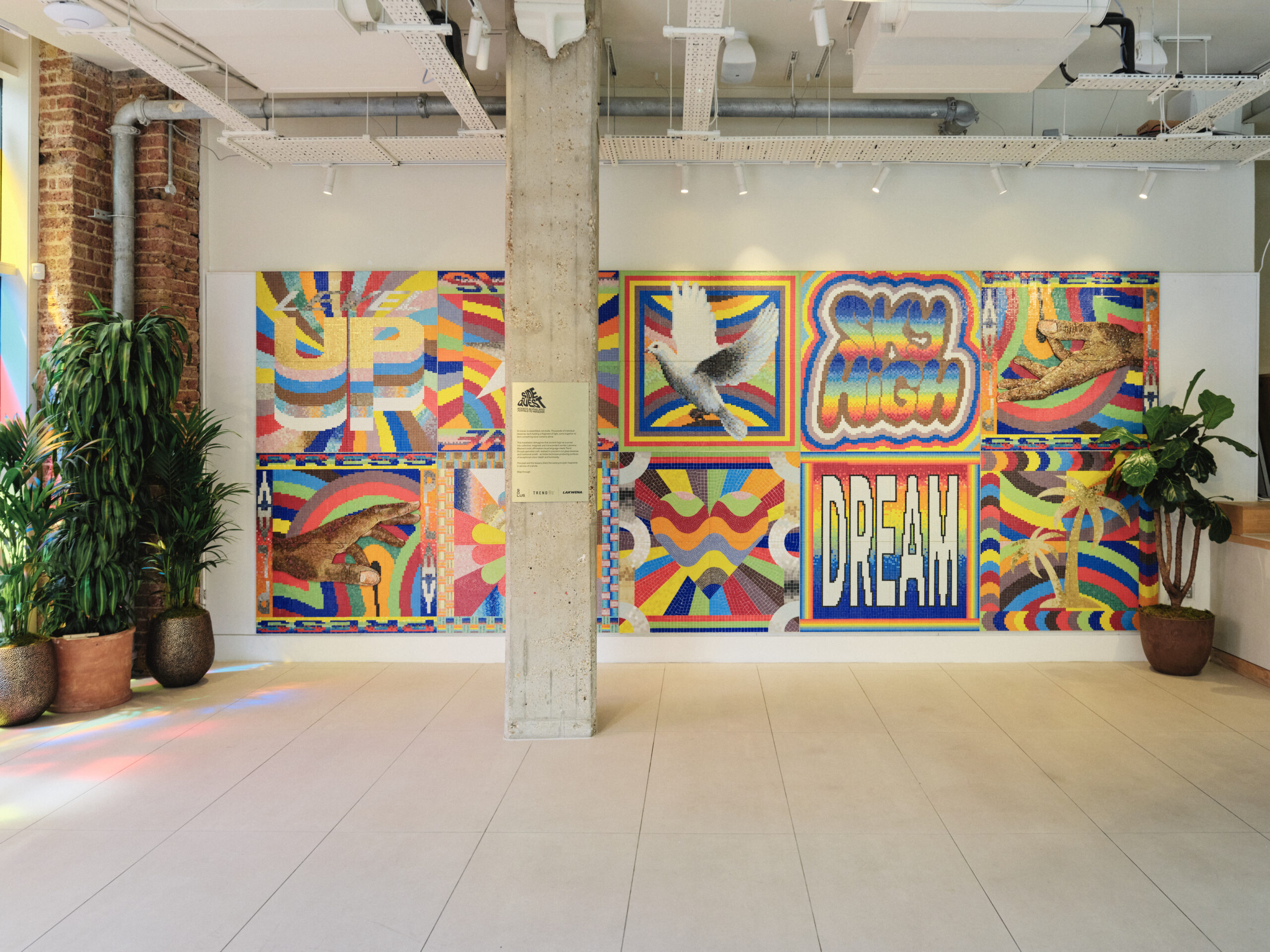
Solus: getting to know Lakwena
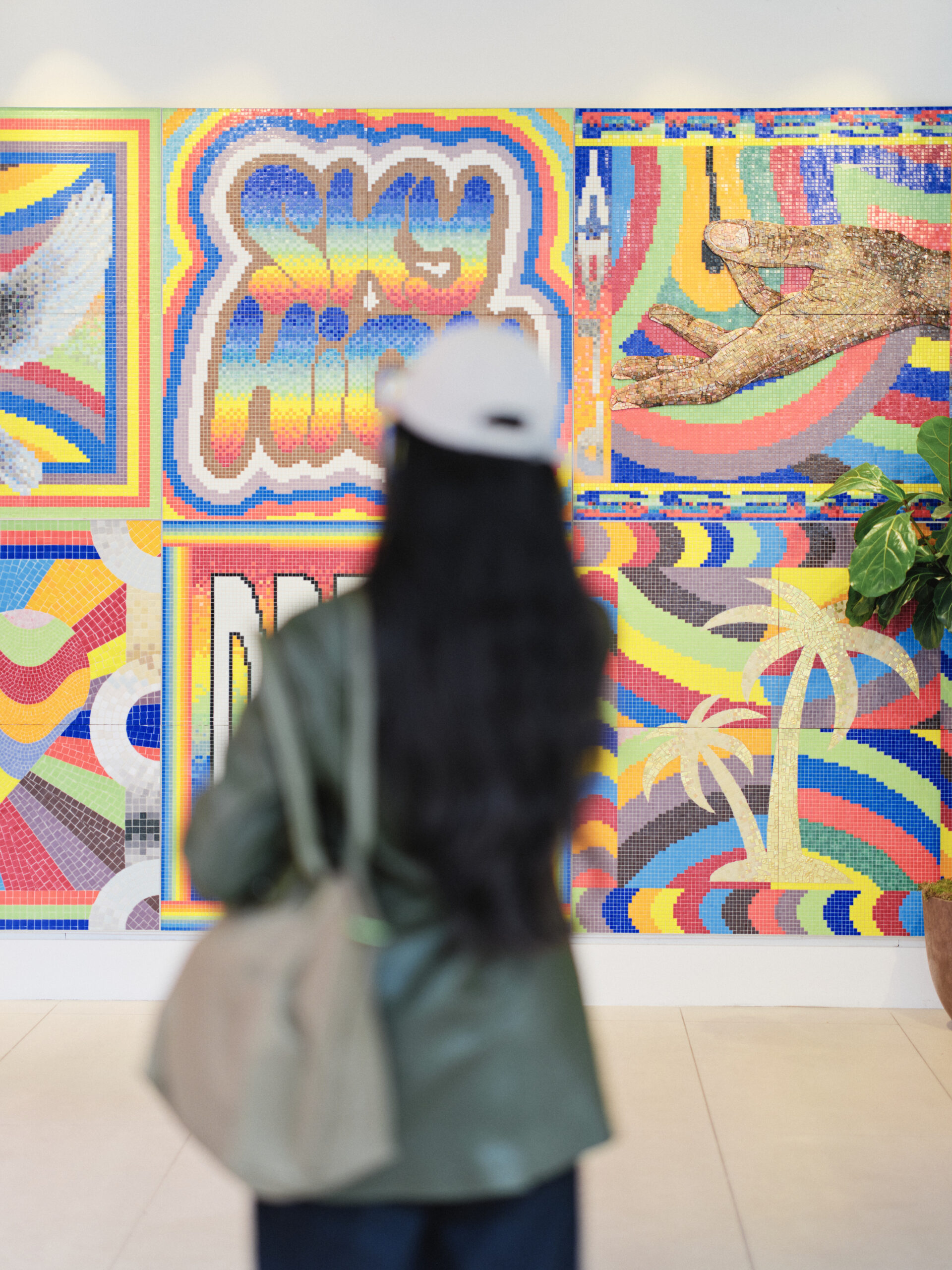
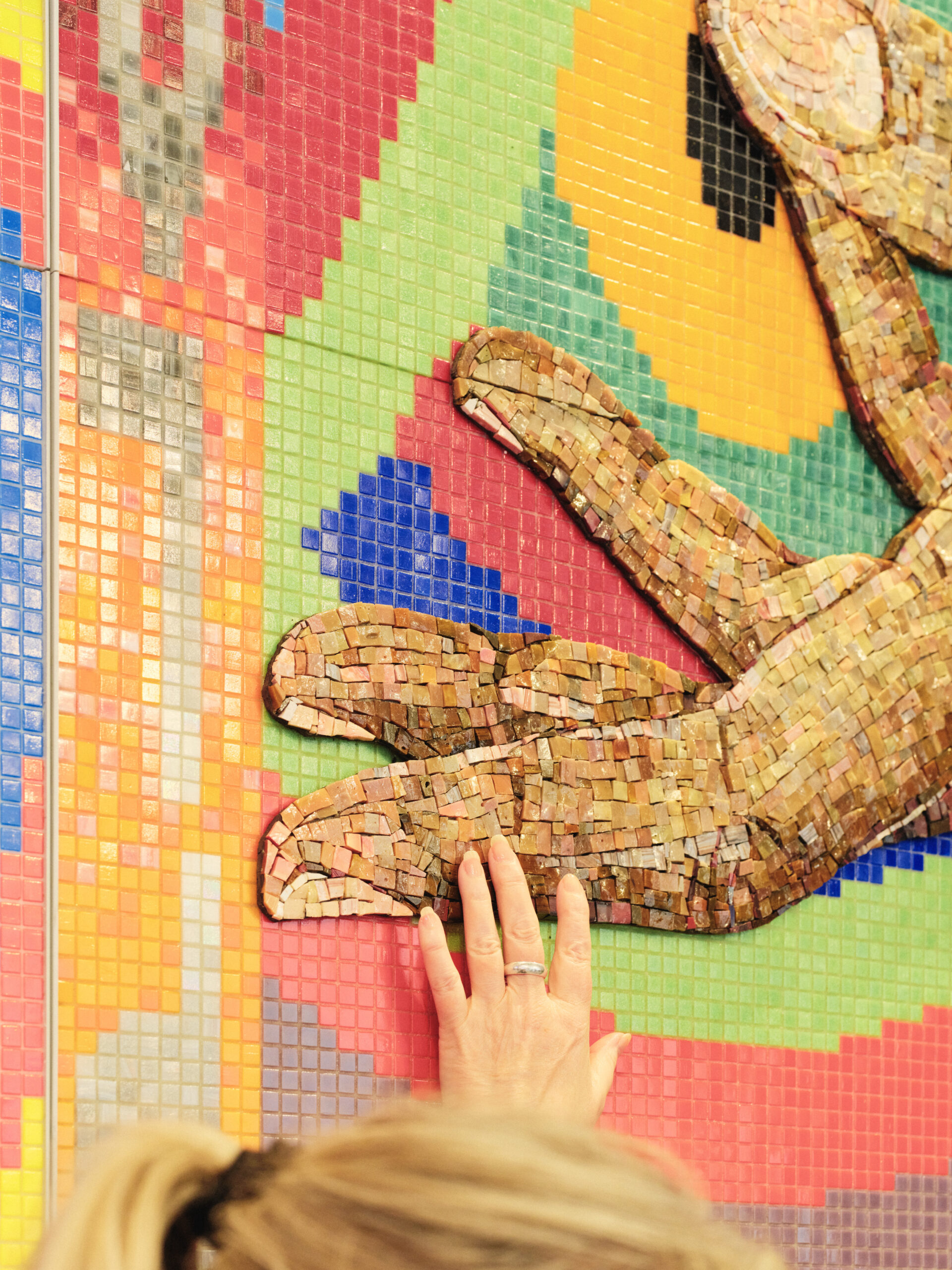
Sam Frith asked us to install two artworks by Lakwena, designed in Italy and manufactured by Trend, alongside a paper-faced mosaic entrance mat she had also designed. We had never installed artwork before. So before we picked up a tool, Dan spent time with Lakwena’s work: her pieces made from cardboard boxes salvaged from market stallholders; the collaboration with Apple that projected digital Christmas trees onto the Battersea Power Station chimneys; the film in which one of the contributing artists drew her tree as a way of working through her sister’s death.
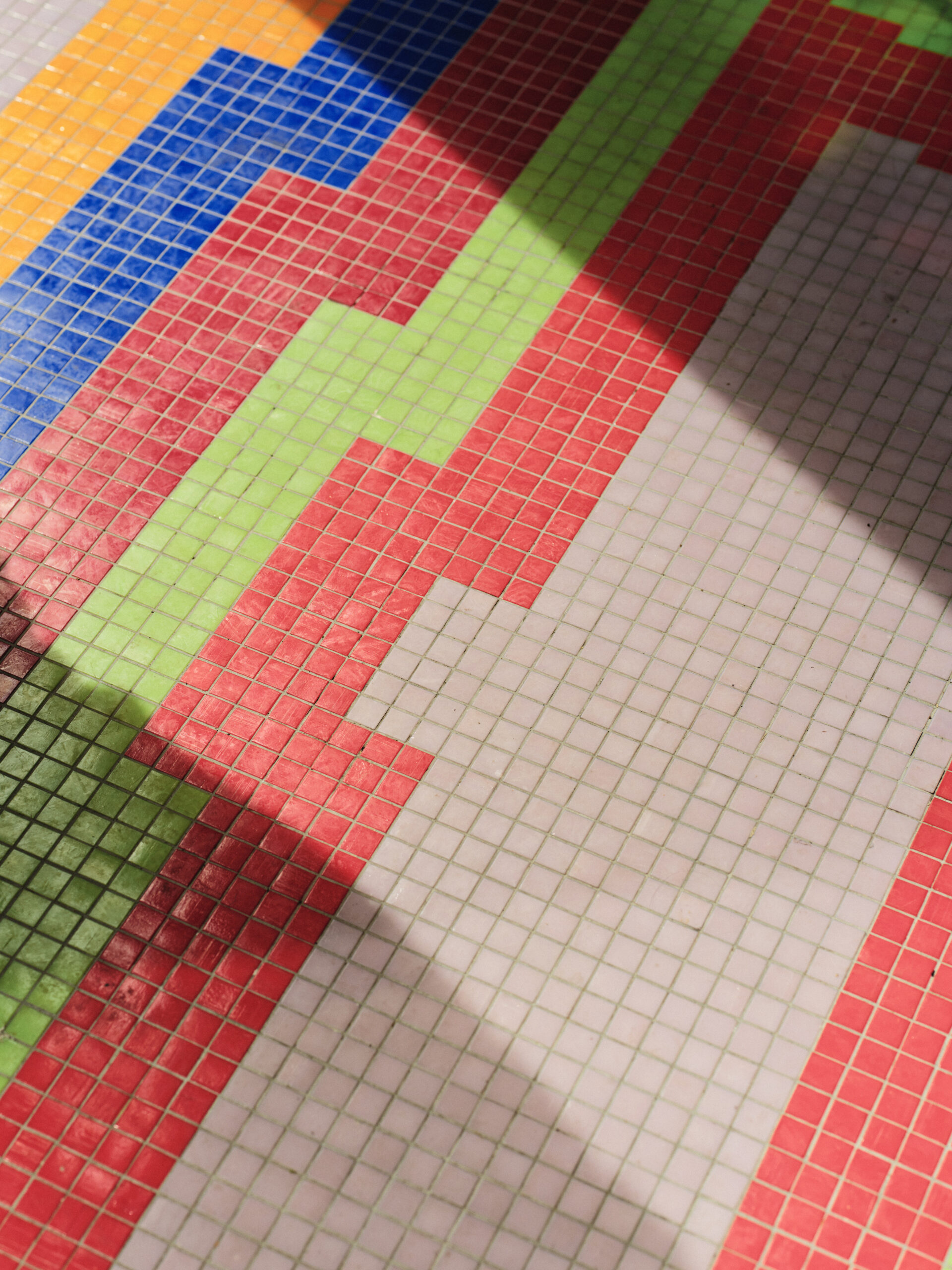
When the panels turned up they were in metal trays that had warped in transit, so the four-panel pieces had to be coaxed flat against the wall. The entrance mat, a paper-faced mosaic, has to be laid by numbers like a jigsaw, with the pattern hidden under brown paper until the paper is wetted and peeled back. If a tile is in the wrong place, you find out at the reveal. Lakwena talks about returning to a childlike state in her work. That rang a bell with us in so far as you have to enjoy the work, and access a state of flow.
Florim: a quiet brief, held to standard
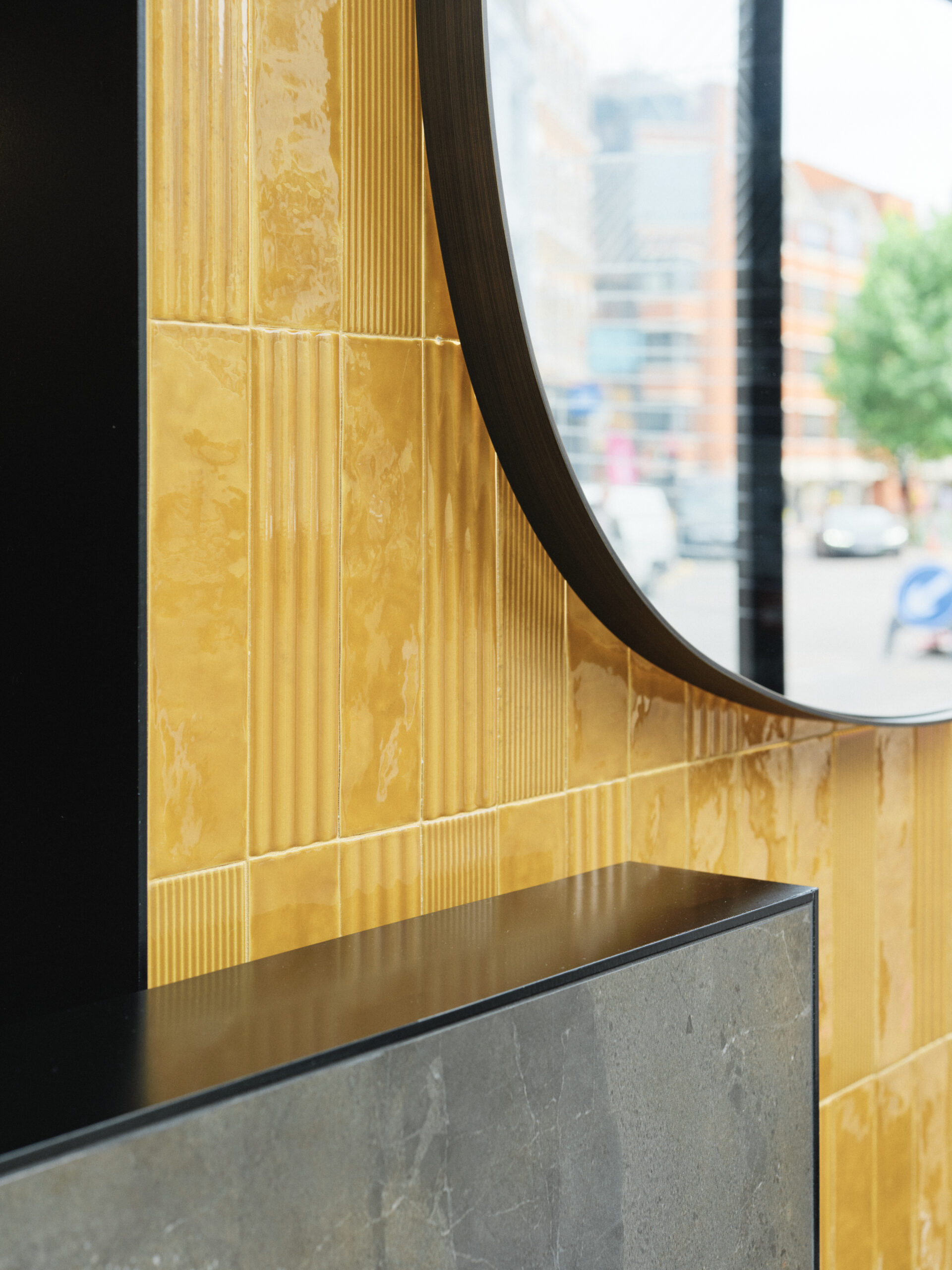
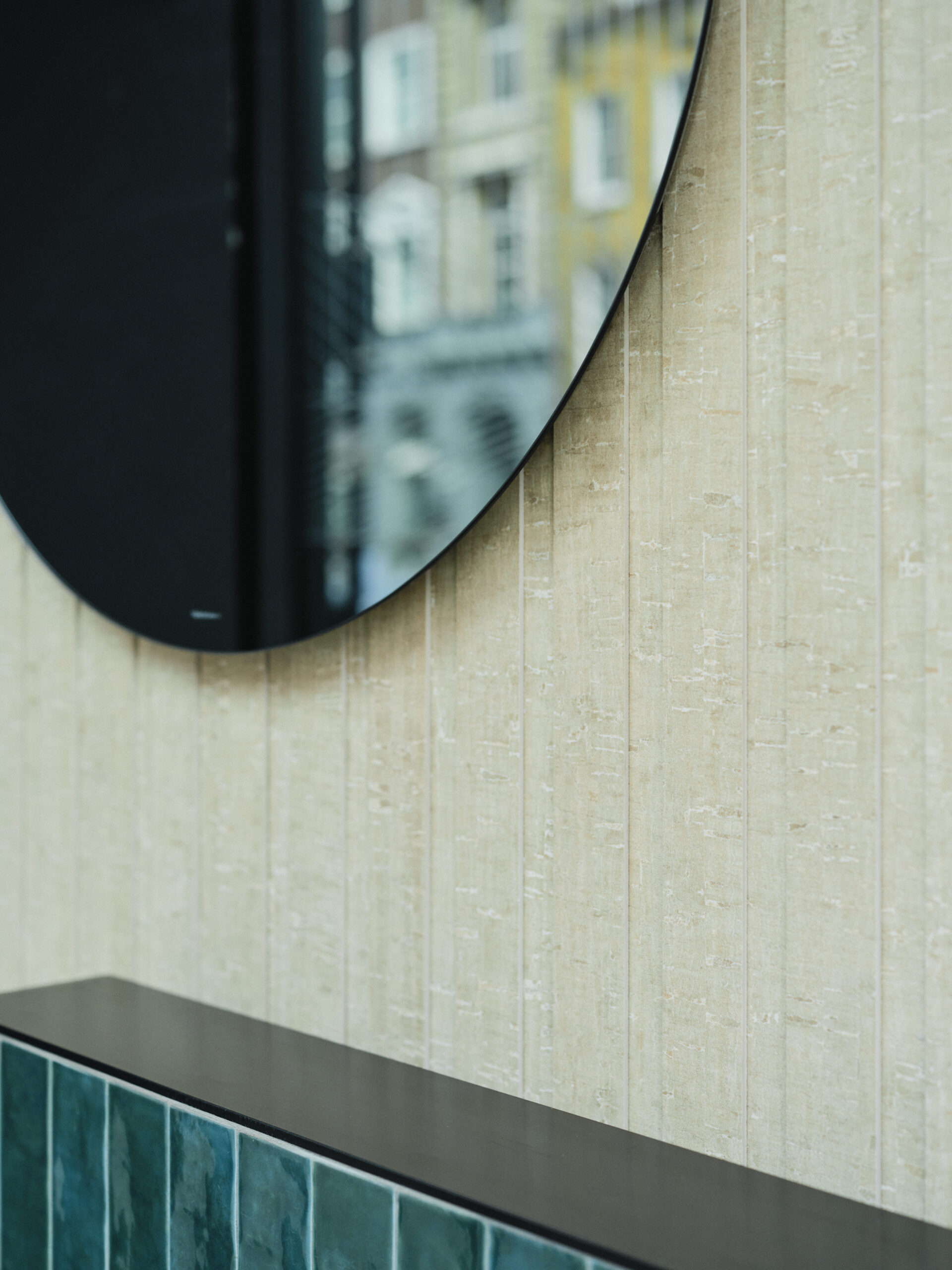
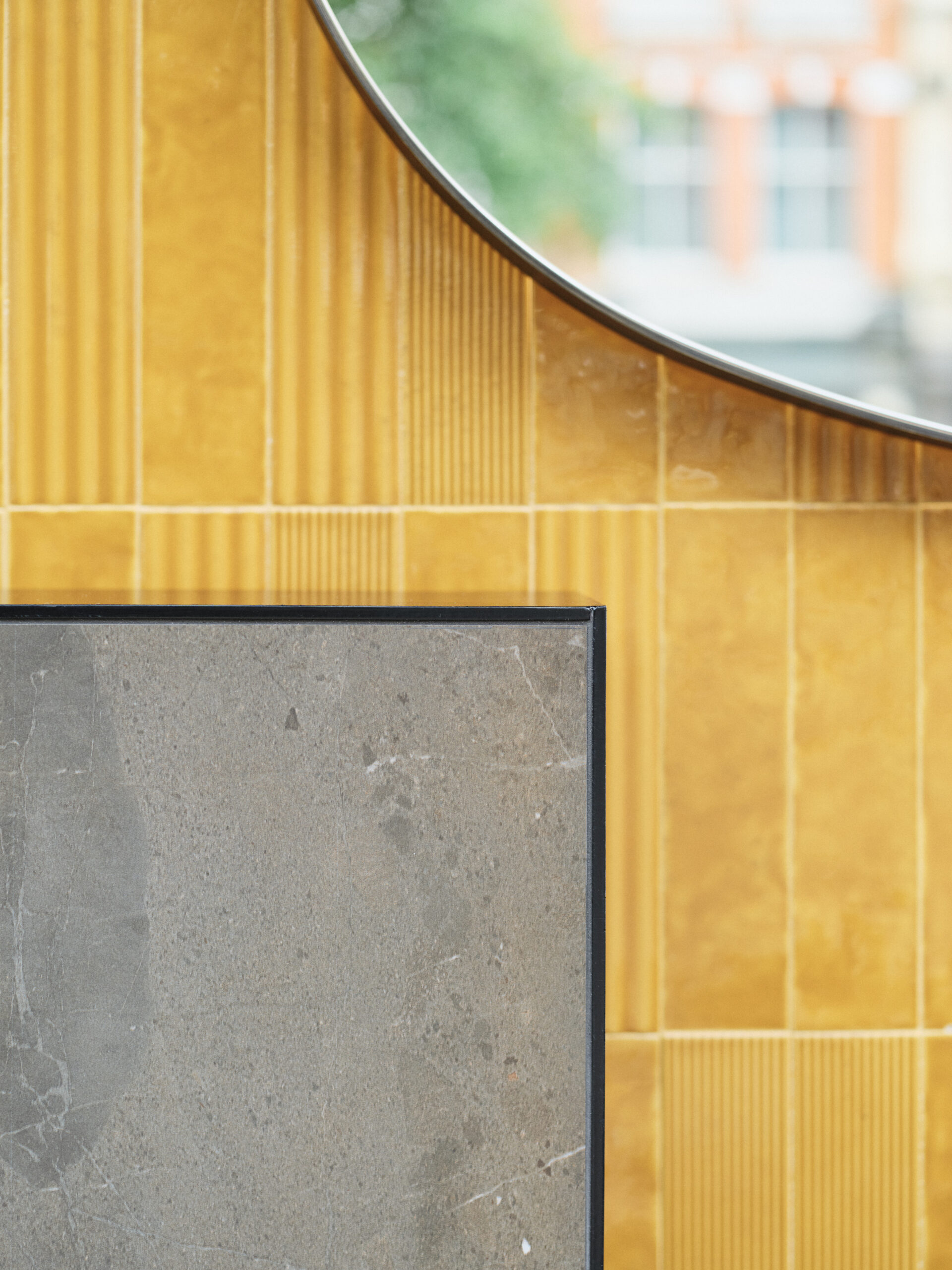
Richard O’Sullivan asked us to install Florim’s new ranges in the window of their Clerkenwell showroom: ceramic tiles, vanity units, mirrors. It is the kind of brief that does not get talked about much.
When the tiles arrived chipped and dented on the pre-formed panels, we flagged it. The client was relaxed about it; we were not. The point of having Arcitile on an install is that the quality control sits with us, not with the client. If it goes in below standard, the client carries the embarrassment. We would rather take the conversation now than put our name to it later. Window displays count too.
EH Smith: a CGI on Monday, a window on Friday
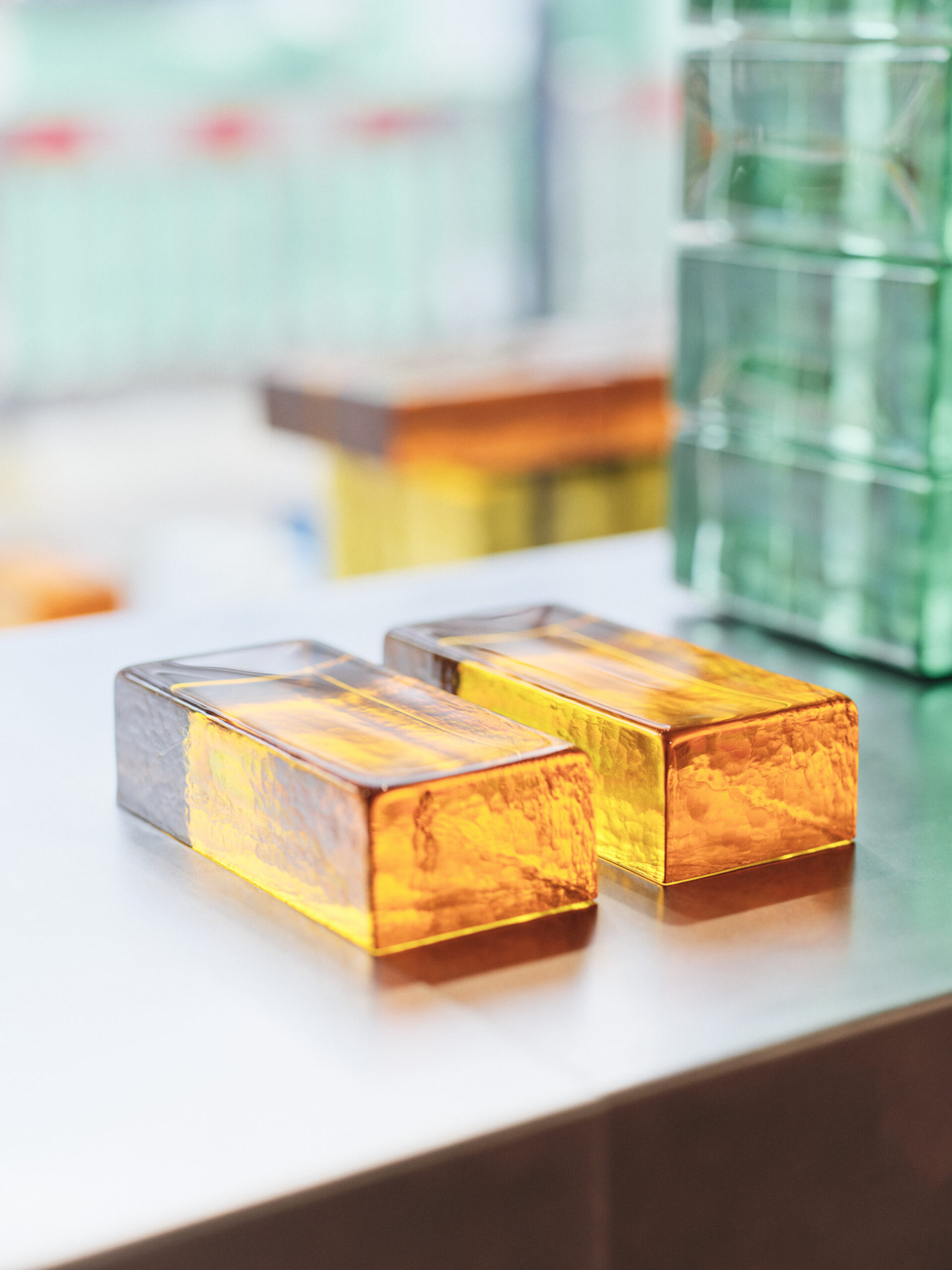
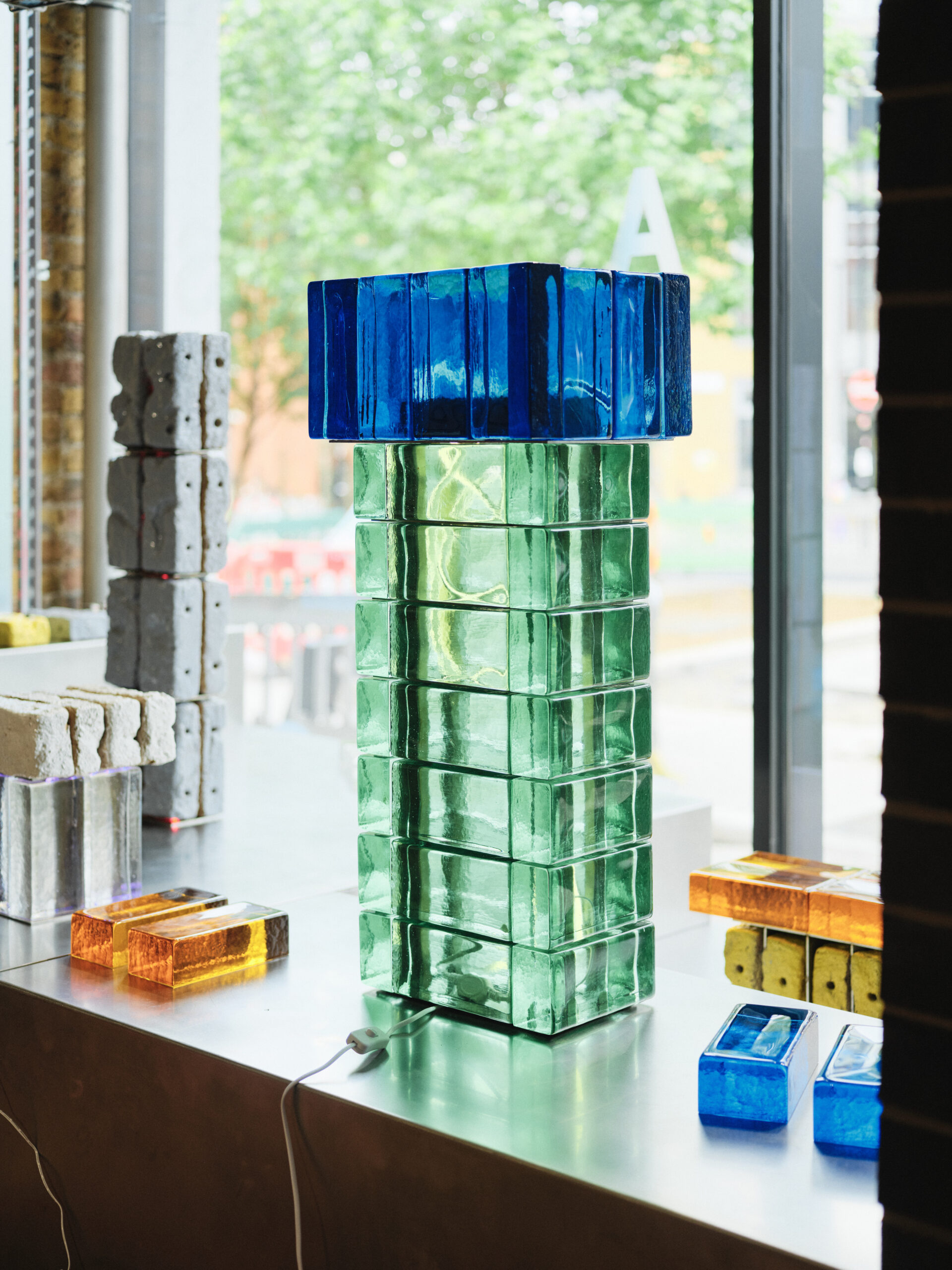
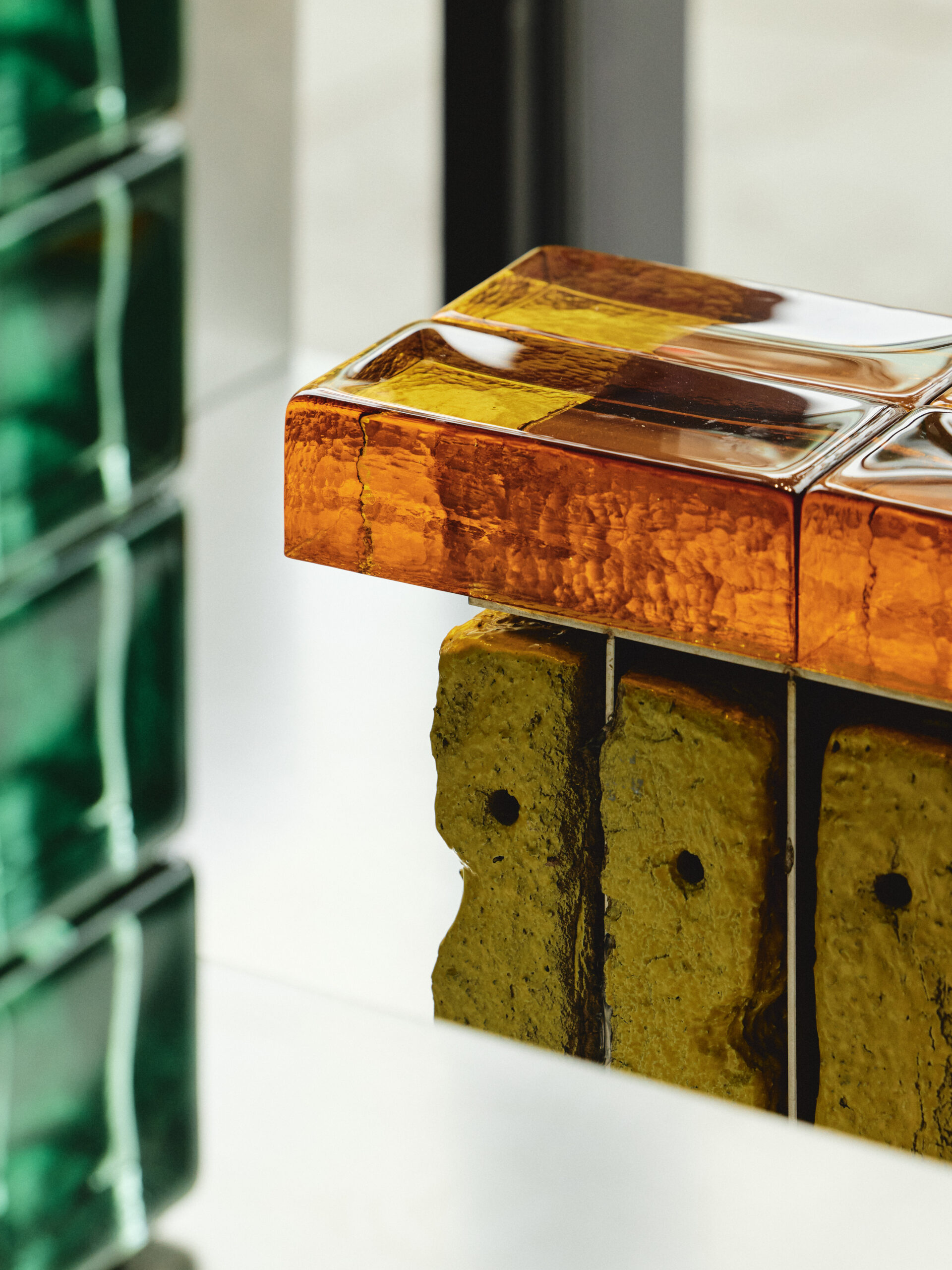
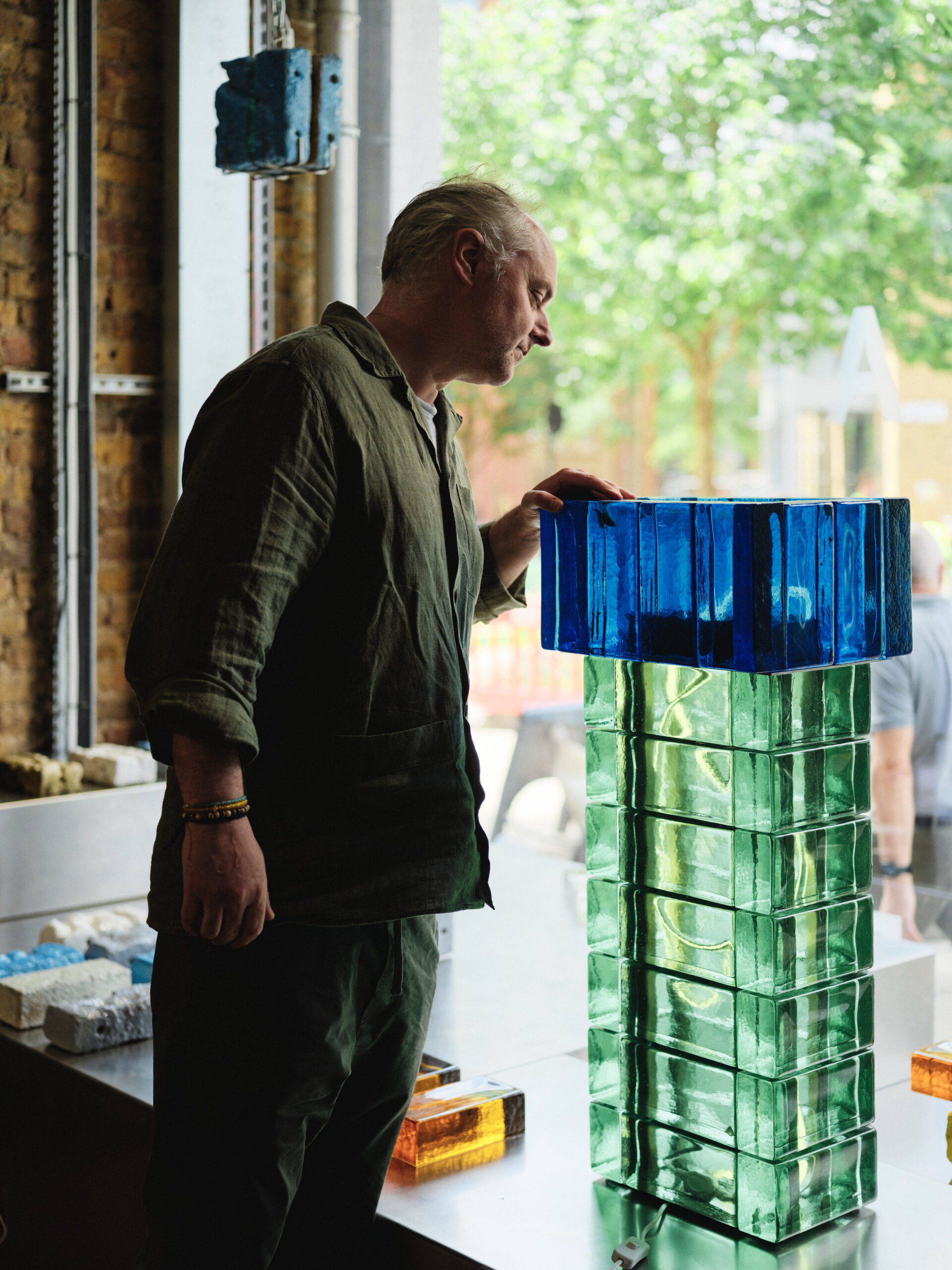
Architect Simon Astridge came to us with an AI-generated concept: bricks repurposed as small furniture pieces and pendant lamps. Could we make it happen? The bricks were delayed at the factory. By the time they reached us at Camberwell Metal Works, we had two days to build, finish, package and deliver before Friday’s install ahead of the show. Eroded brick tolerances varied by five to seven millimetres. We could not order the LED lighting in advance because we needed the structures in front of us to work out where cables could be hidden. Metalwork was amended on the bench.
Half the job was conducting it: deciding which brick paired with which; listening to the people doing the work without losing the architect’s intent; going back on the Thursday and unpicking what had been bonded with too much silicone, before the visible glue set. On Monday afternoon, the day before launch, the EH Smith team were understandably worried that the window was still empty. Solus, who we have worked with before, knew it would land. EH Smith were trusting us cold. We kept the lines open, we kept the work moving, and we got it in. Simon said afterwards that one of the lamps could have jumped straight off the CGI, down to the way the swirl of light sat inside it.
What ties it together
There is a story the industry tells itself, in which installation is a logistics problem and tilers are pairs of hands to be scheduled. We do not recognise it. The point of Arcitile is that we direct the work because we understand what is being made and we care whether it is done properly. Dan is as comfortable spending an afternoon reading about an artist’s practice as he is on a bench at midnight working out how to hide a cable. The two halves are not in tension.
There might be a hundred ways to install something. On our projects there is one: the Arcitile way.
Collaborators
Solus
Trend Group
Florim
EH Smith
Architect
Simon Astridge
Artist
Lakwena
Special Thanks
Sam Frith
TM Studio
Superbeam
Salt PR
Photography
Shin Miura