Framing the Fear with Florist
Date
March 2026
Location
London, UK
“You don’t understand what graffiti is, if you’ve never run away from the cops.” - MrKas
It’s 5 am. Sudden, insistent banging at the front door. Florist is just waking up, his girlfriend by his side. He looks out the window and sees three figures in the back yard. He opens the door and five police officers barrel in, cuff him and haul him into the back of a van.
His crime? Making art in the public domain. The Met have responded to a complaint from a landlord upon whose property one of Florist’s delightful mosaic pieces has appeared. A team has investigated and tracked down this menace to society to get him off the streets.
I feel safer already.
Florist is now embroiled in legal proceedings, which he can’t talk about at length, which have seriously restricted his ability to bring his artwork to the street.
“I could go out tomorrow and put loads up. I know epic spots. But having police bang on your door at 5am with your girlfriend there, that stress isn’t worth it. I just want to do what I was doing. There’s probably a way around it. For now, it’s going through it properly, maybe with a solicitor.” he tells me.
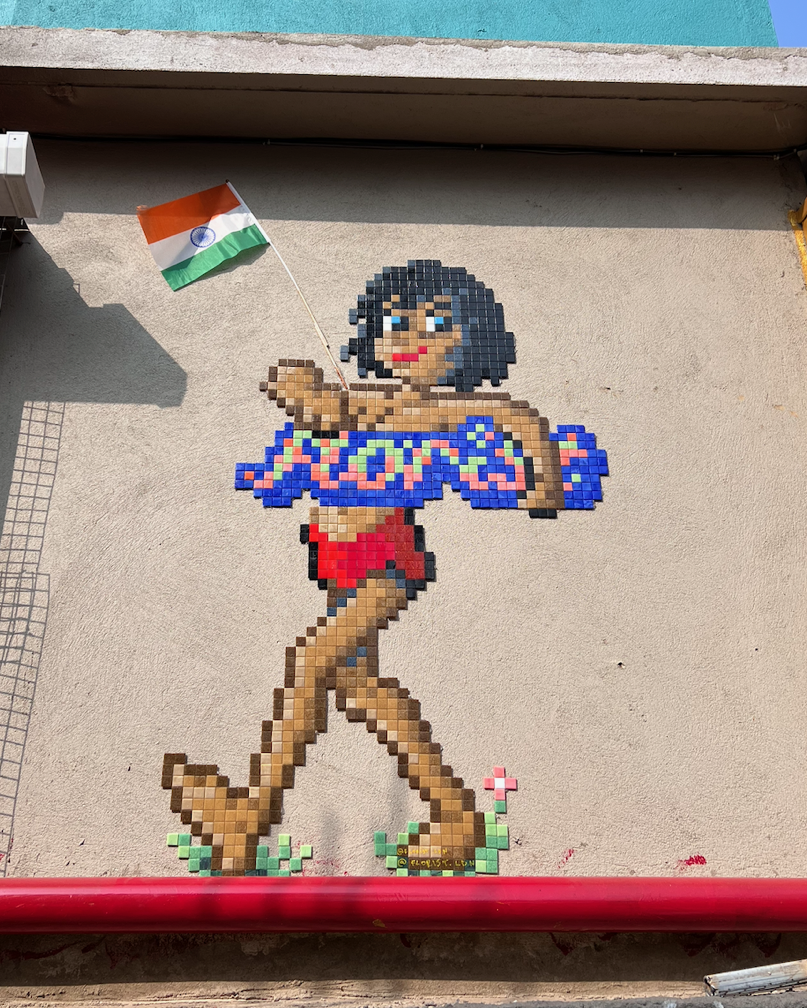
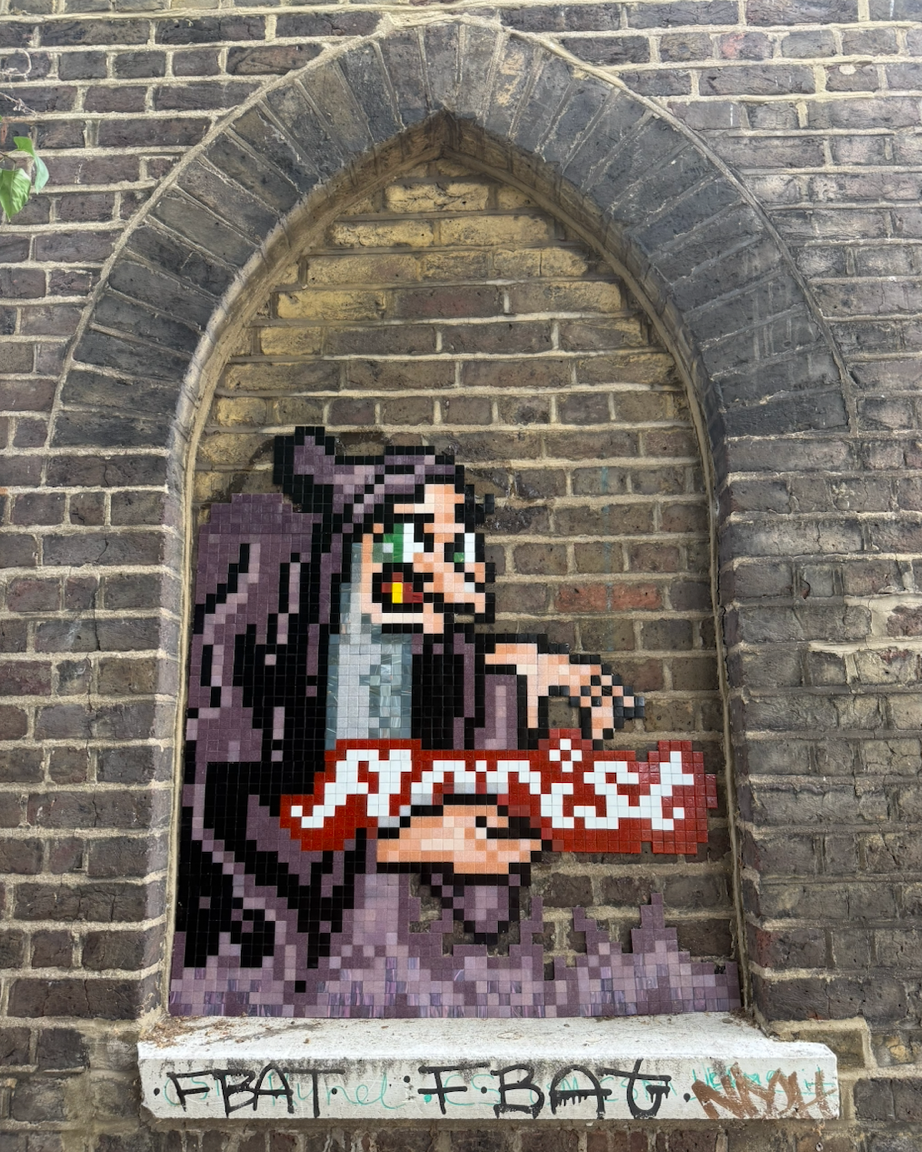
The hostility to ‘street art’ seems to come from the owning class. Most people delight in a well-executed graffito, bringing colour to the urban greyscape, provoking thought or feeling while travelling through the city. But, unless you’re Banksy, your art is vandalism which drives down the value of real estate; and that won’t do.
We could argue that “street art” is a problematic term. It’s just art. Are the caves of Lascaux, ‘street art’? The necropolis murals of Egypt? The desire to depict our lives on the fabric of our lives is ancient. And appending the adjective ‘street’ is an act of colonisation by capital which seeks to proscribe, measure, categorise and put a price tag on everything. The uncommodifiable creative act appalls money, hence the repression.
“If our creativities are guided by the public policies, we are not gonna be able to paint anything at all.” - INTI
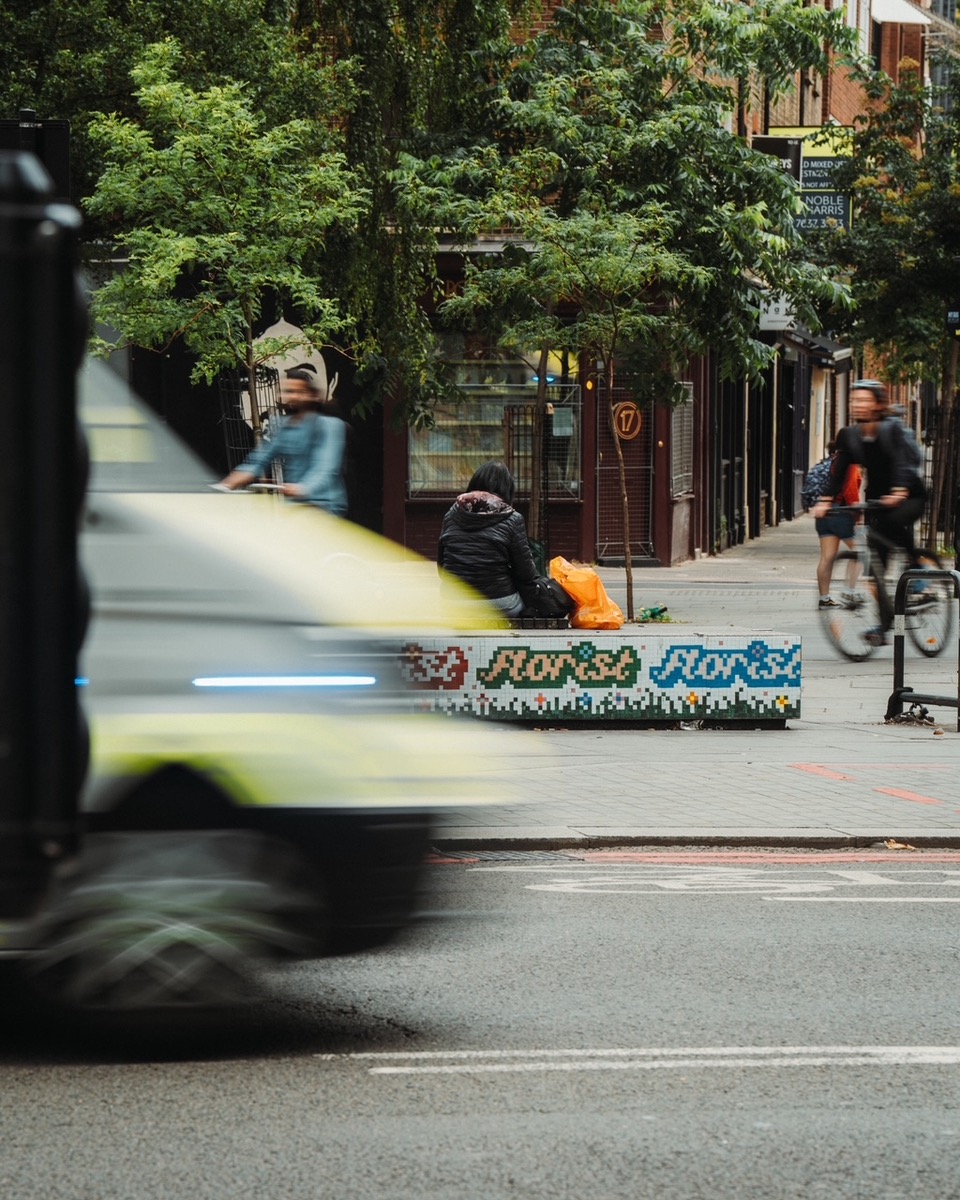
Let’s start at the beginning. Who are you and what do you do?
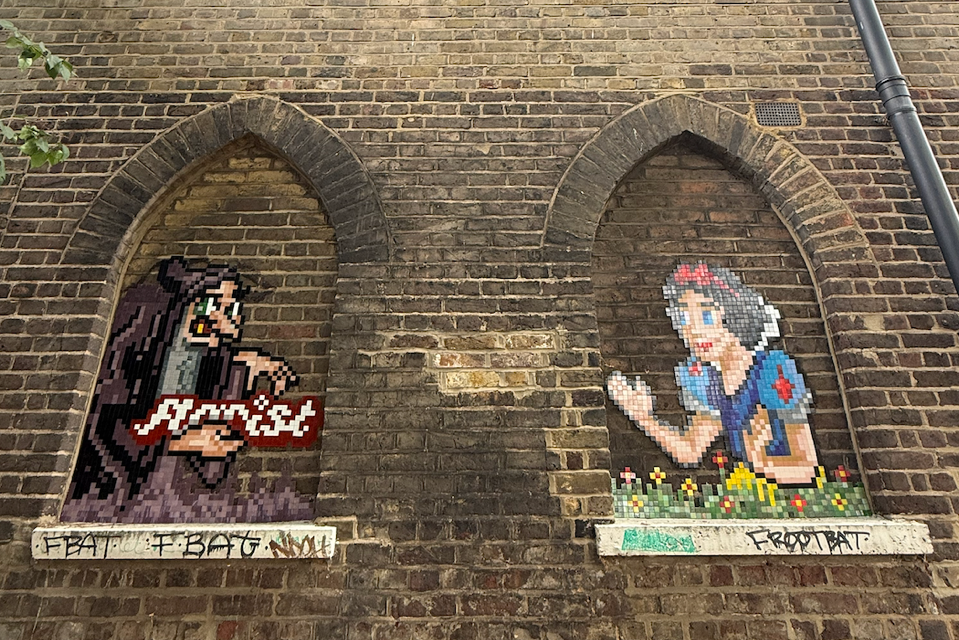
I’m a street artist. I put up mosaics in interesting places. I like to put them in architectural frames, whatever that may be. Bricked-up windows are my personal favourite, although I’m slowly beginning to understand that a lot of them are on Grade II listed buildings, so that’s something I need to think about going forward.
I like to give my artwork a frame because when I started, I’d put a small mosaic flower into the cityscape and it would just get lost. The city’s a noisy place. It’s busy. There’s lots going on. Architecture, advertising, layers of history. Things get lost. And I wanted to be seen. That’s the reality.
So I started putting them in frames. I realised people like things with borders.
A well-known artist once said to me that lingerie works because it frames the body. It makes you look. And that got me thinking about why my art pops more when it’s framed. It doesn’t have to be a wooden frame, the whole building can be the frame. That’s worked quite well.
I try to tailor the mosaic to the building; the colours, the pattern. The architecture is really important.
You say the purpose is to be seen. Is there any social purpose behind what you do?
Yeah, there is. I wouldn’t say it’s super profound. When I go to an area of a city that’s culturally diverse and rich in art, it makes me feel a certain way. I want to add to that feeling. That sense that you’re on the edge of something; something cool, something different, something counter-culture.
You’ve talked about creating order out of chaos. Why is that important?
It goes back to the frame. A frame partitions something off into something orderly. If you removed all the fences from a row of terraced houses, it would just become chaos.
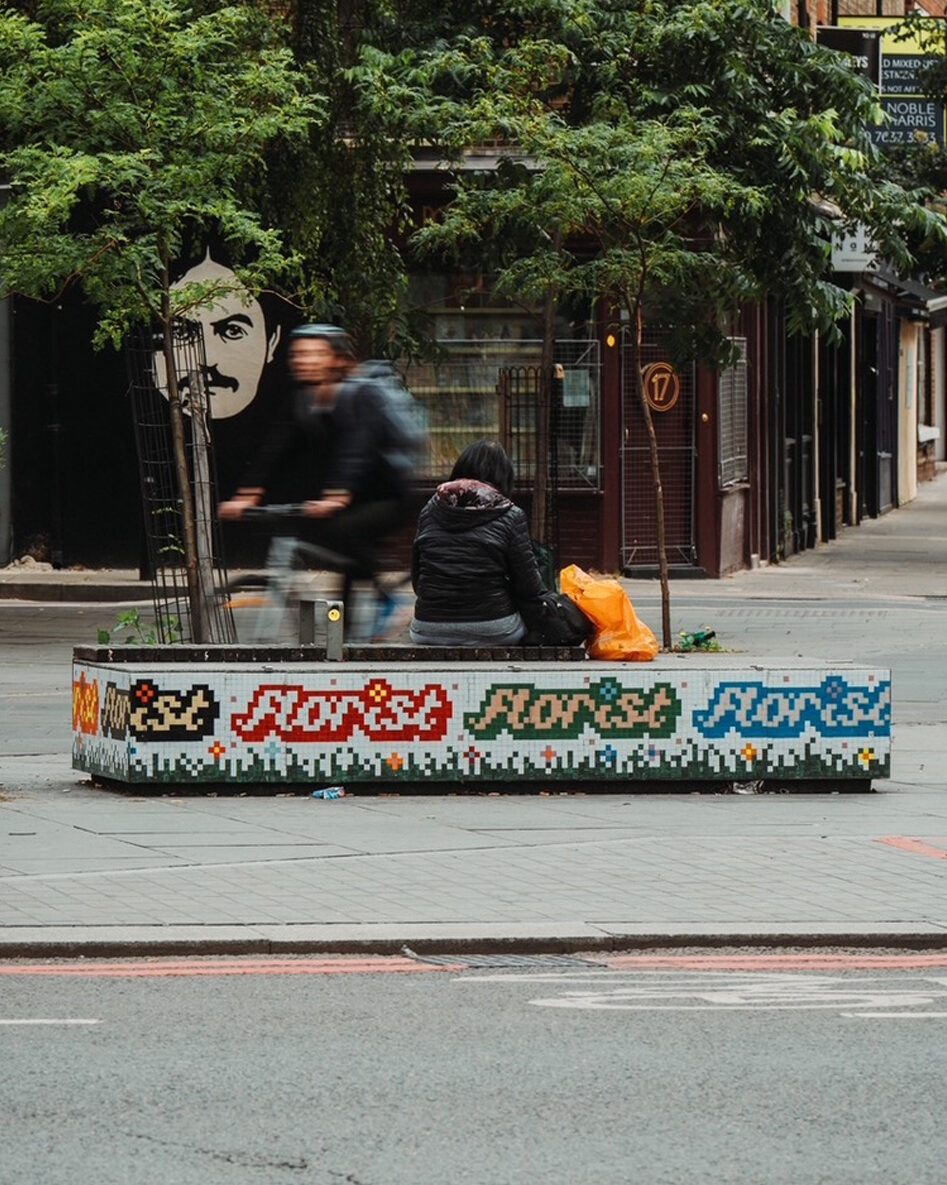
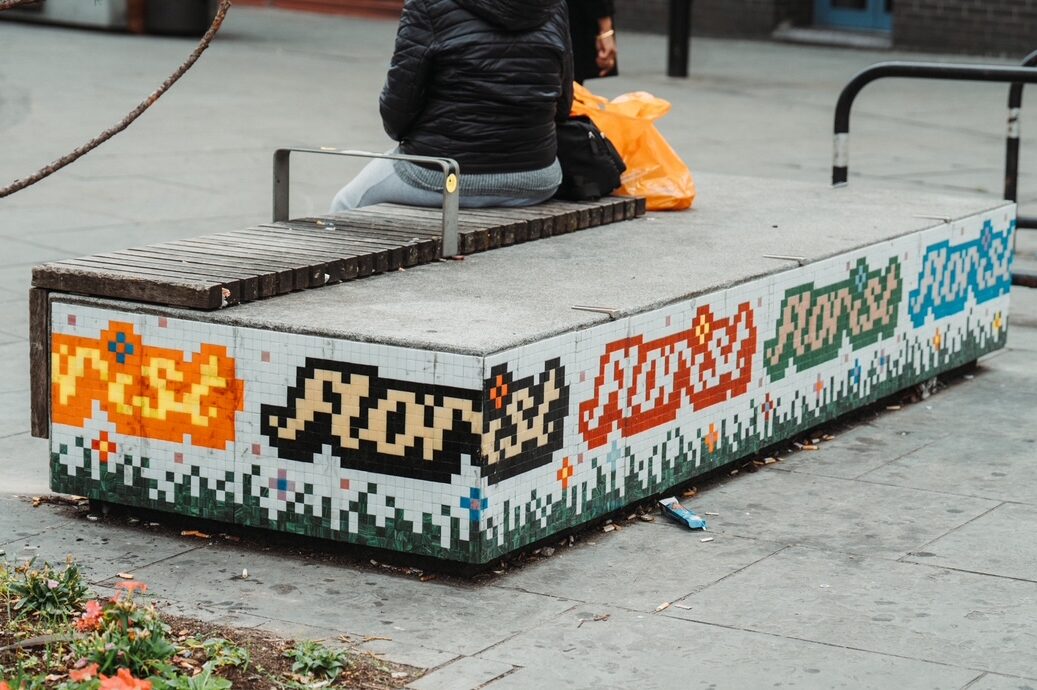
When I started doing the repeating florist pattern, I didn’t know why I loved it so much. I like looking back at my life and asking why certain things interested me.
I made this repeating pattern, put it in frames, and I loved looking at it. People shared it. And I had to ask why.
If you strip it back, it’s just tiles repeating horizontally and vertically. There’s a rhythm. Life can be frightening; entropy, unpredictability, the unknown. When I see a complete mosaic in an architectural setting, framed and repeating, it soothes something very deep down. It creates order from disorder.
Was art always a part of your life?
Definitely. When I was younger, I’d get the train to Waterloo and there was a billboard at Clapham Junction called the Clapham Colossus. I’d get excited just to see what advert was on it. When the internet came around, one of the first things I searched was how much it cost to advertise there.
At the same time I was into graffiti. I got arrested. Did community service. I knocked it on the head and became obsessed with starting an out-of-home advertising business. For about fifteen years.
But I was in and out of addiction. In and out of trouble. Life was chaos.
At one point in recovery I tried setting up something called Edney Media; renting A1 spaces in newsagents’ windows in Hackney. I relapsed again.
When I got sober properly this time, I dropped the big business ambition. I realised I had to start at the bottom. But the out-of-home aspect always spoke loudest to me. I just wanted to be outside. I love signage.
Originally I wanted to build mosaics for restaurants and hotels, like Victorian entryway mosaics. I contacted architects, interior designers, even Arsenal Stadium, as they have some awesome mosaics. Didn’t get anywhere.
I got a scholarship at the London School of Mosaic. I lasted one term. I think I’m ADHD. I thought I could do it quicker myself.
I’ve heard some people describe ADHD as a superpower; would you agree?
My brother works with young people with ADHD and said I tick a lot of boxes; trouble with the police, addiction, starting things and not finishing them. The mosaics are the first thing that’s stuck.
I don’t love labels, but I think it can be a superpower if you’ve got the right people around you. Creatives start things. Conscientious people run them.
I’ve got a website developer, engineering background, very calm. I’m quite “let’s go, let’s go.” My partner helps me with the diary. I can’t do calendars. Everything’s in my head. Loads of plates spinning.
It’s a gift and a curse.
When it becomes too much, does it trigger relapse?
It starts with sleep. Then judgement goes. When I’m on a good run I take on loads. Then when I crash I still have to deliver. That’s hard.
I’ve got a lot of fear. I’m scared of flying. I don’t like sleeping in unfamiliar rooms. That’s why I drank. I drank on fear.
Now, I look at your espresso and I quite fancy one, but I can’t. Anything that alters my mood becomes a problem. I’ll have an espresso and think I can bang out a mosaic all night. Then it’s the slippery slope to the “I’ll start again tomorrow” mentality.
There’s much more at stake than just making a few quid.
If we have this conversation in three years, what’s different?
I need to make some changes. I want growth at my own pace. I’m going to learn screen printing next. Slowly.
I can handle growth; just at my pace. Who knows where I’ll be in three years, but right now, I’m right here.